

Brainspotting therapy.
Where you look affects how you feel.
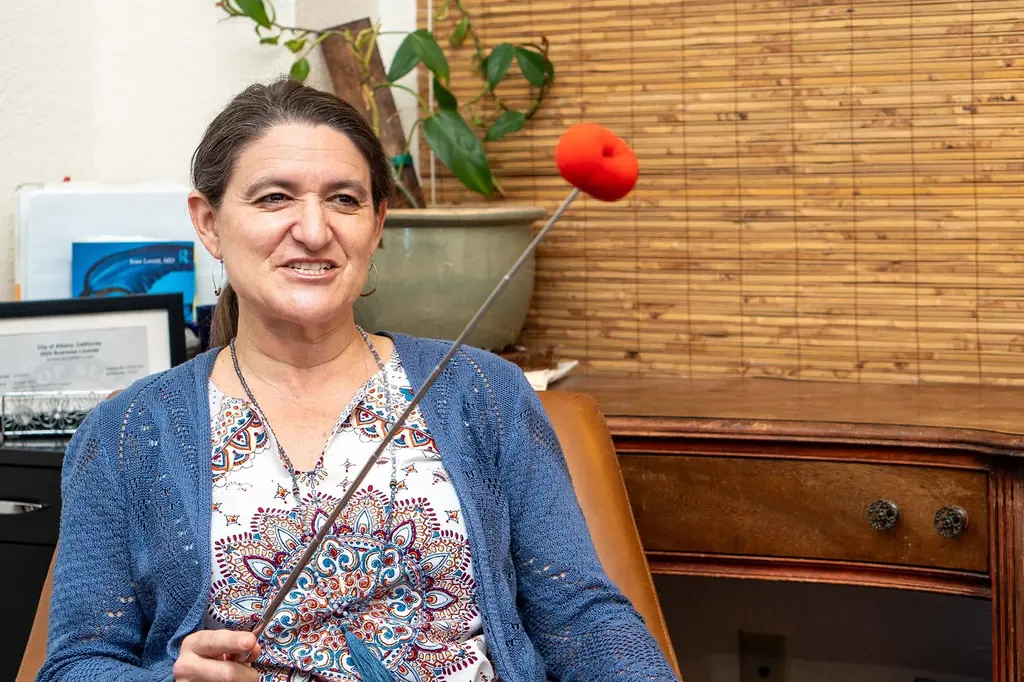
Brainspotting works with the idea that where you look changes what you access. Together we find a 'brainspot' — a specific eye position that opens a doorway into where the material is held. From there the work is embodied and often surprisingly deep. Some sessions are still and inward; others involve a lot of talking, strong feeling, laughter, and/or physical sensation. What stays constant is that the body and brain are doing more than talk alone.
Is this a fit?
- Trauma held beneath language — hard to describe, hard to move
- Performance anxiety, creative blocks, athletic performance
- Chronic anxiety with a strong body signature
- Clients who want the body involved, not talk alone
- Preverbal or early-childhood material
Inside the room.
-
01
Locate the spot
Together we find the eye position that opens the material — often with a tracked pointer.
-
02
Add bilateral sound
Most sessions use bilateral sound or quiet music through headphones, panning gently left to right. It supports the same rhythmic processing the eye position opens up. If you would rather work without it, we simply don't use it.
-
03
Rest attention
You hold your gaze softly on the spot and simply notice what arises.
-
04
Follow the body
Sensations, images and memories come and go; my job is to keep the container safe.
-
05
Release
The nervous system discharges at its own pace — often with less narrative than talk therapy.
-
06
Ground & close
We come back to the room and re-orient before you step outside.
Brainspotting FAQ.
Curious if Brainspotting is your path?
Let's find out together — start with a free 15-minute call.